Contact me Ezine sign up Biography Search Business
| Previous Page | Printable Version | ||
| Using Pictures | |||
Open systems, neurolinguistic programming, psychosynthesis, creative visualisation, right brain thinking, all use pictures to develop holistic thinking. I first learned this technique from Chris Bull then of Sheppard Moscow Associates. When combined with counselling skills and coaching it can be a powerful catalyst for change. When to use it "Pictures" are best used when the client (an individual or small team) needs to think about where they are going. They are looking for a direction in work, life or through a specific problem. How to use it Principles You simply ask the client to draw a picture of how they see their situation now. They then label the picture with a phrase (Often in the form Verb (modifier) Noun) which describes the process that is going on there. An example could be "Struggling Alone" when people are working frantically. The client then draws another picture that describes how she/he would like things to be at a time in the future, one to two years is usual. She/he describes the desired process as a verb and noun (say) "Achieving calmly". Finally you help the client to choose the change process that will help her/him to change things from the present to the future process. This might be "Helping Each Other". Benefits People usually feel much better when they become clearly aware of the present situation and why it is frustrating them. This gives them something to tackle. Building a vision for the future energises them. It is even better in a group when people find they share the same dreams. The strategic direction can inform and give life to all the work that a person does. Old issues that have festered for years get confronted and dealt with. Practical tips
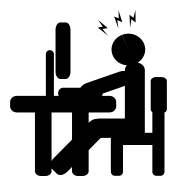
An example of the "pictures" process. (These pictures are from a clip-art collection. In a real situation people will draw "stick people". The images, feelings and ideas are important, not the art.) The preferred future state Achieving calmly
The present state Struggling Alone
Then ask the client to come up with strategic direction that gets you from "now" to the preferred "future". As above, "Standing Back". Then ask what that would mean and what the client would do in practice. I usually use A4 paper in a one to one setting and flip chart paper in a group. In the latter case I encourage shared working at all stages. Sharing Please use any of the buttons below to share this article more widely. |
|||
Contact me Phone +44 (0)1707886553, or +44(0)7879861525 email nickheap43@gmail.com or Skype nickheap Using these materials Language The language on this site is correct UK English throughout. There are differences in spelling and meaning between UK and US English. The context should make the material understandable in the US. Further Information There are free articles, exercises, designs, book references and links to other sources about many aspects of personal, team, management and organisation development on this website. I will add other resources as I learn what you want.  Follow @nickheap
|
|||
| Previous Page | Back to Top | Home | Printable Version |